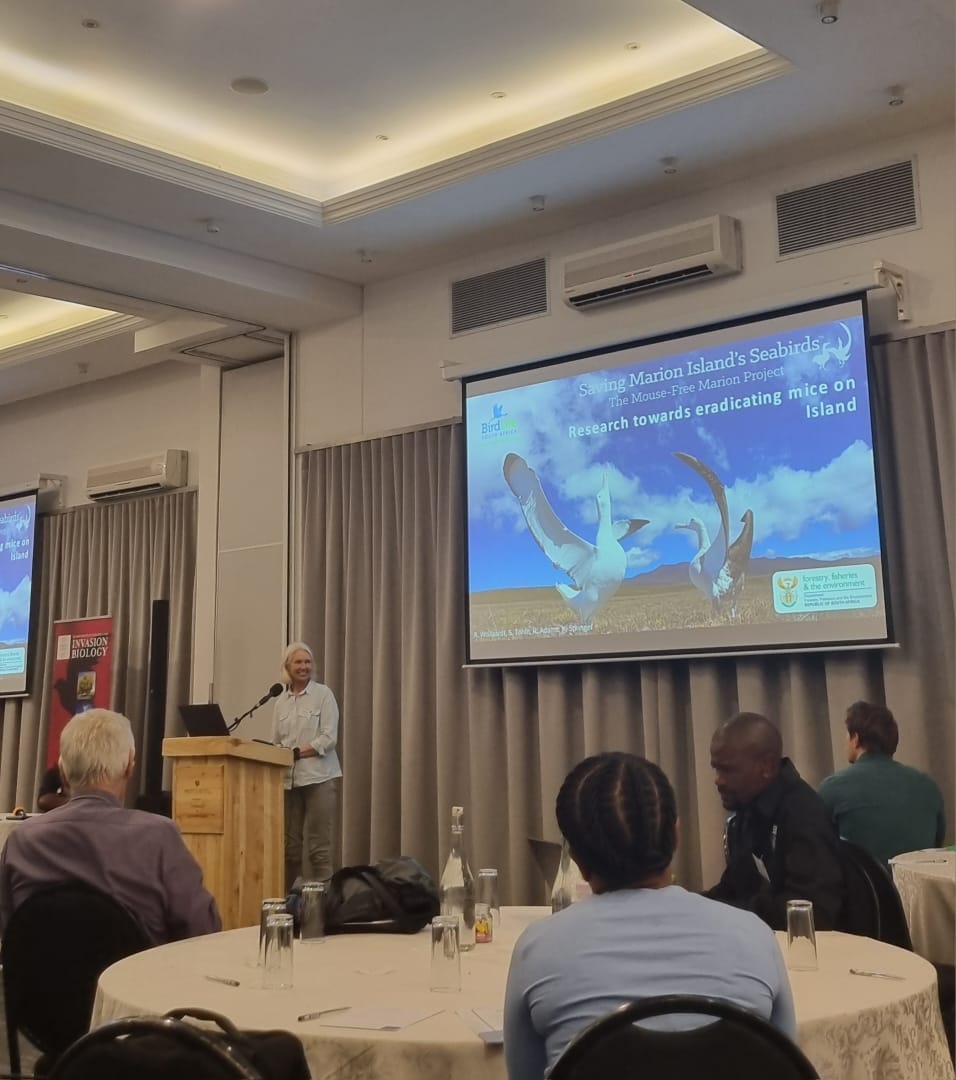
Sue Tonin speaks about progress with the Mouse-Free Marion Project; photograph by Guy Preston
Earlier this month, the Saving Marion Island’s Seabirds: The Mouse-Free Marion (MFM) Project attended the 2026 National Symposium on Biological Invasions, held in the Protea Hotel and Conference Centre, Stellenbosch, South Africa. The Symposium was open to experts, researchers, students, managers and policymakers currently working on or with an interest in biological invasions in South Africa. The MFM team co-authored three contributions, presented by Assistant Project Manager Sue Tonin, Michelle Greve, Department of Plant and Soil Sciences, University of Pretoria and Monique van Bers, a University of Pretoria postgraduate student who was the project’s overwintering field assistant for 2024/25.
In her talk on the second day of the three-day conference in a session on management, control and restoration, Sue described the preparatory work required before a full-scale eradication effort directed at Marion Island’s introduced House Mice can be made. This includes assessing mouse abundance and distribution, refining operational planning, and undertaking field experiments at progressively larger spatial scales, culminating in a 1050-ha aerial baiting trial, scheduled for 2027. These studies are considered essential for optimising the baiting strategy and maximising the likelihood of success.
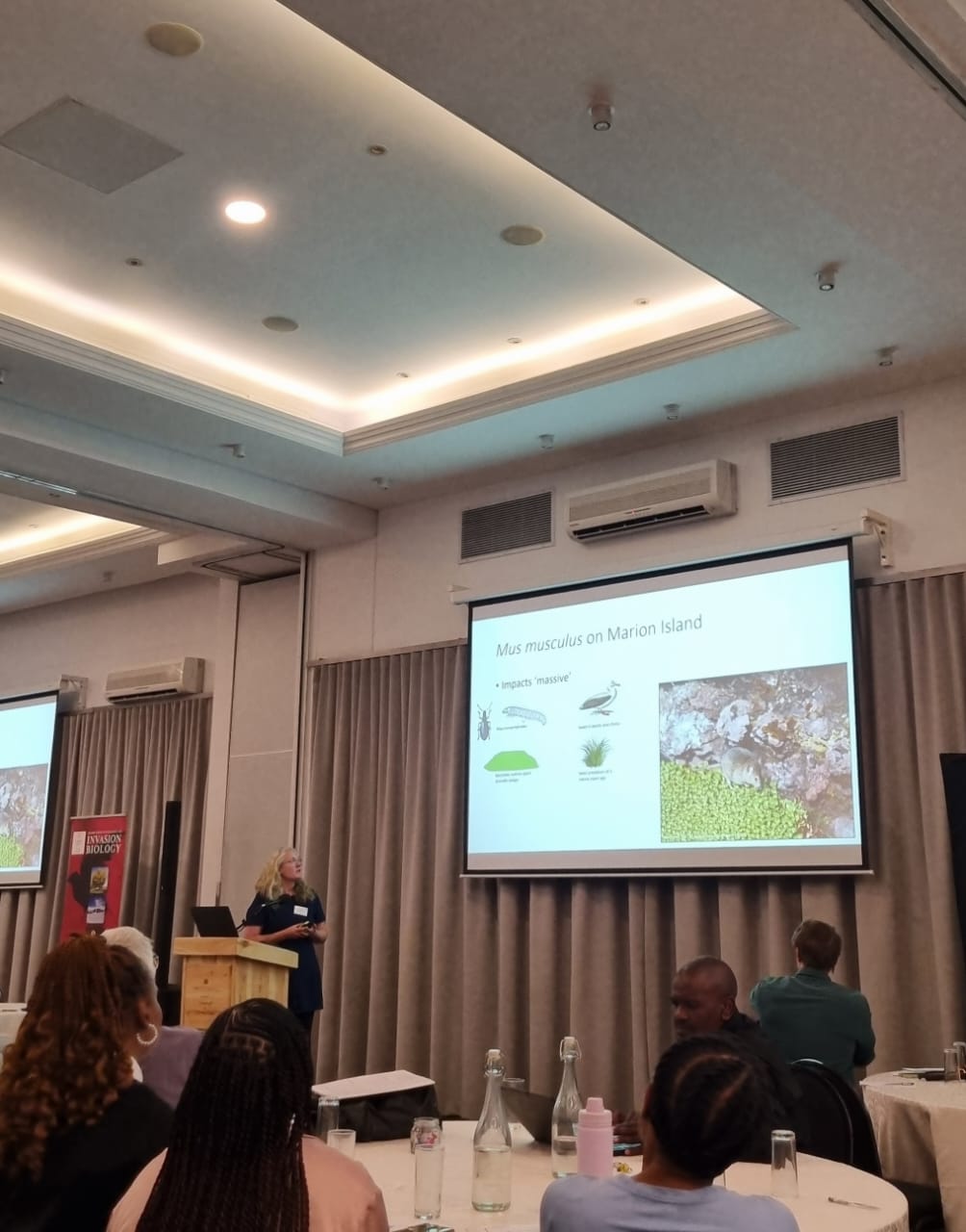
Michelle Greve at the lectern; photograph by Guy Preston
Michelle Greve, an Associate Professor in the University of Pretoria’s Department of Plant and Soil Sciences, then presented on research aimed at understanding the potential consequences of mouse eradication on the native and invasive plant and invertebrate communities on Marion Island. Her study integrated research conducted by her many co-authors over several decades. In her talk she enumerated the role of mice in seed predation of both invasive and native plant species and used comparisons with neighbouring mouse-free Prince Edward Island to better understand mouse impacts on plant and invertebrate communities. She showed that mouse eradication is expected to result in higher seed output for both native and invasive species, though native species will benefit more. She expected the recovery of invertebrate and plant communities on Marion Island to result in shifts towards those of Prince Edward Island communities.
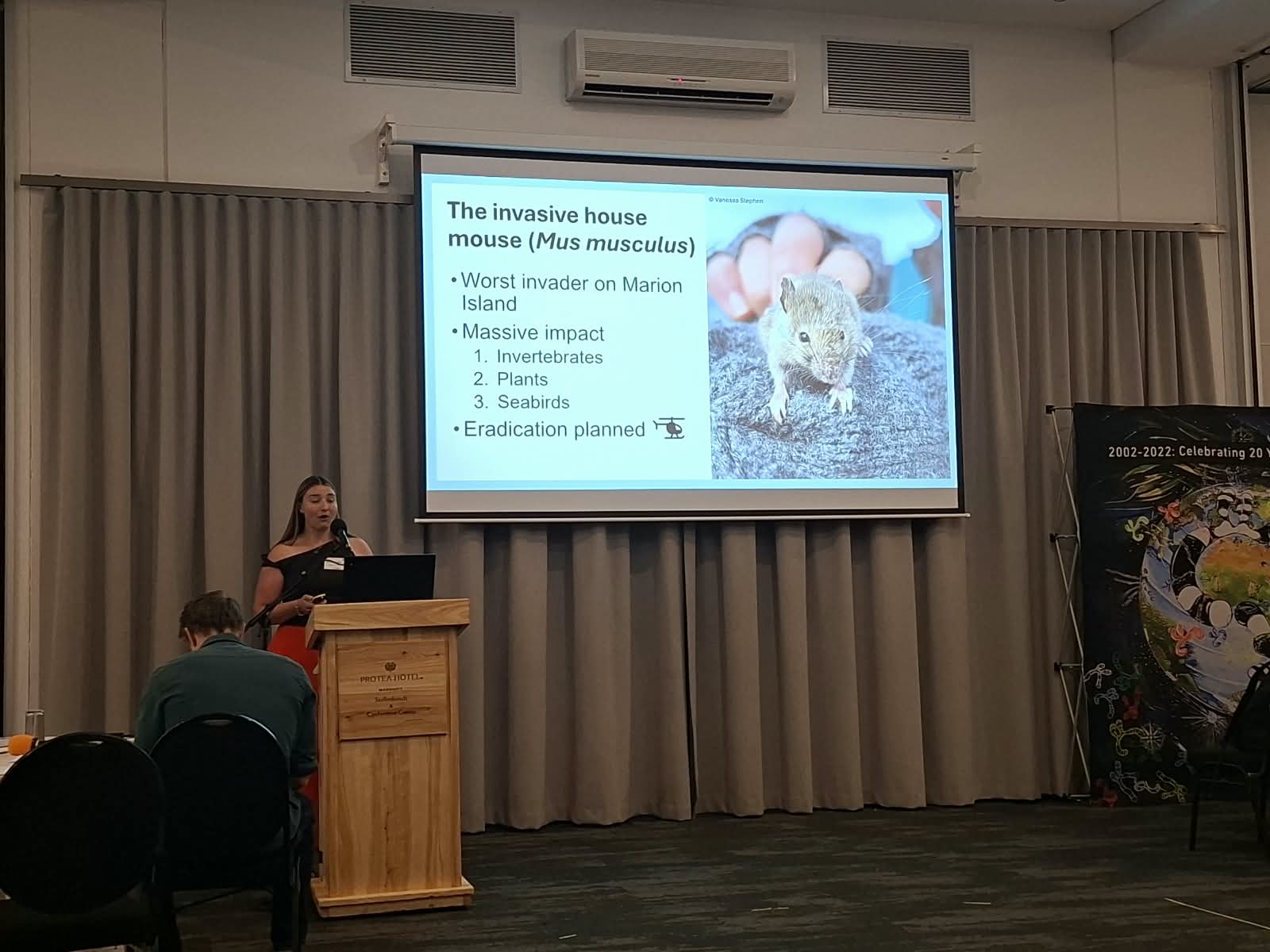
Monique van Bers had just three minutes to give her speed talk; photograph by Michelle Greve
In the same session Monique van Bers gave a three-minute “speed talk” on her MSc study examining the abundance of House Mice across elevational gradient on the island. She described the field work undertaken with trap lines up to an altitude of 770 m in winter and in summer. Her findings supported the application of more bait at lower elevations closer to the coast than at higher altitudes in Marion’s polar desert region.
The National Symposium on Biological Invasions 2026 was hosted by the University of Stellenbosch’s Centre for Invasion Biology and the South African National Biodiversity Institute. Click here to access the conference abstracts.
Presentations:
Michelle Greve*, Nicola Marneweck, Holly Kellett, Peter le Roux, Camilla Smythe, Elsa van Ginkel, Elmar van Rooyen, Marike Louw, Bongekile Kuhlase, Alison Hepplestone, Janine Schoombie, Candice Neves, Steven Chown, Justine Shaw & Charlene Janion-Scheepers: Towards an improved understanding of the potential consequences of mouse eradication on native and invasive plant and invertebrate communities of Marion Island
Monique van Bers*, Sue Tonin, Anton Wolfaardt, Keith Springer & Michelle Greve: Patterns of the invasive house mouse (Mus musculus) index abundance across the elevational gradient of Marion Island
Anton Wolfaardt, Robyn Adams, Sue Tonin* & Keith Springer: Eradicating Mus musculus from globally significant Marion Island
*Presenter
Sue Tonin, Assistant Project Manager, Robyn Adams, Communications Officer and Project Assistant & John Cooper, News Correspondent. Mouse-Free Marion Project, 24 November 2026
*********************************************
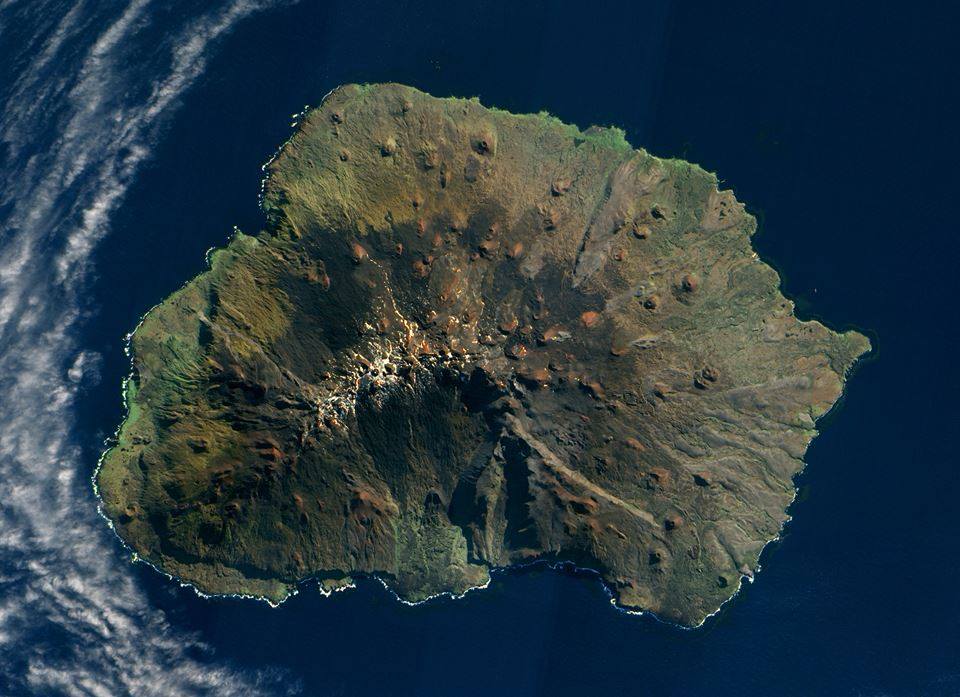
Mouse densities in Marion Island’s central polar desert zone are much lower than elsewhere on the island, justifying a lower bait application rate
The Saving Marion Island’s Seabirds: The Mouse-Free Marion (MFM) Project is a registered non-profit company (No. 2020/922433/08) in South Africa, established to eradicate the invasive albatross-killing mice on Marion Island in the Southern Ocean. The project was initiated by BirdLife South Africa and the South African Department of Forestry, Fisheries and the Environment. Upon successful completion, the project will restore the critical breeding habitat of over two million seabirds, many globally threatened, and improve the island’s resilience to a warming climate. For more information or to support the project please visit mousefreemarion.org.