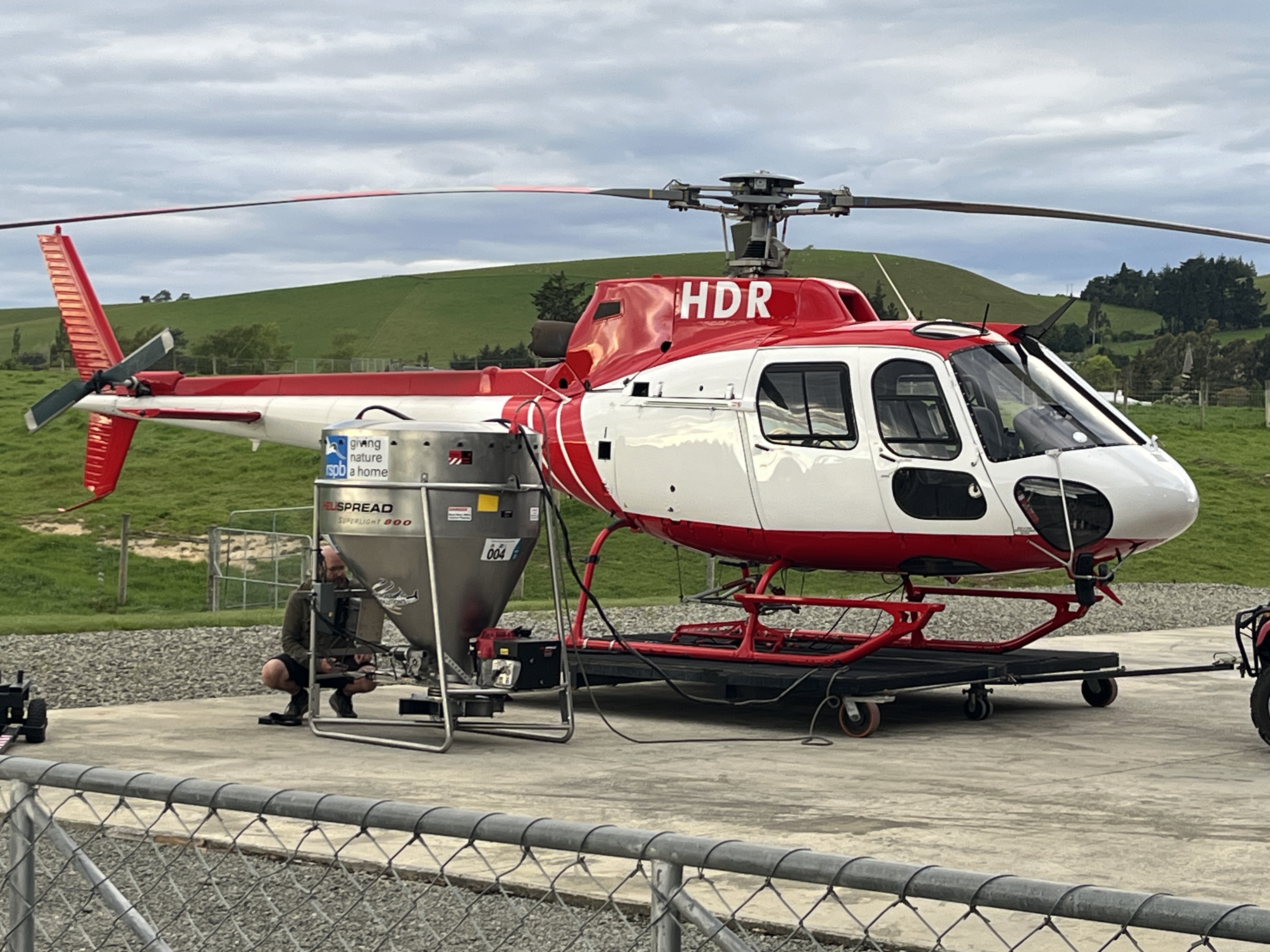
An AS350B3 Squirrel helicopter alongside a baiting bucket, Central South Island Helicopters, Herbert, New Zealand
Over the past 12 months, the Saving Marion Island’s Seabirds: The Mouse-Free Marion (MFM) Project, in conjunction with the New Zealand Department of Conservation (DOC), has been undertaking bait trials in New Zealand. These have involved using a range of bait sizes that are smaller than the 10-mm diameter, 2-g bait pellets that have typically been used for rodent eradications. The trail baits used are all non-toxic.
The motivation for these trials is based on the concept of increasing the encounter rate for House Mice during planned eradications on South Africa’s Marion Island and New Zealand’s Auckland Island by the Restoring Maukahuka Project. The basic premise is that using smaller pellets means more bait pellets per kilogram of bait spread, thus providing more chances for foraging mice to encounter bait.
Whereas the encounter rate increase is the desired goal, smaller bait pellets need to be field trialled to determine whether they are still spread in an even pattern and have an acceptable swath width when distributed from a bait bucket suspended below a helicopter. If the toxin concentration remains the same as standard bait pellets (usually 20 or 25 parts per million, depending on the manufacturer), then a foraging mouse would need to consume proportionally more smaller pellets to ingest a lethal dose.
There is also the possibility – as yet untested – that smaller pellets could enable a lower application rate to be used. This is because we know much of the bait spread in eradication operations remains uneaten. However, this hypothetical aspect was not studied in these trials.
Initial trials in 2025 assessed a 5.5-mm diameter (0.6-g) bait pellet. This bait pellet demonstrated sufficient disadvantages that it was not further considered for operational use. The smaller diameter pellet was about the same length as standard pellets and was prone to fragmentation when subject to the mechanical forces of being flung through a spinner under the bucket. Further, the lighter weight meant that the effective swath width was narrower, and the pellets were more prone to drifting in windy conditions. These aspects would have required setting flight lines closer together to compensate.
Attention then turned to pellets with the same diameter as standard ones, but shorter in length. The selected pellets to trial were 14 mm (1.4 g) and 10 mm (1 g). We wanted to see if these still had similar aerodynamic properties as 2-g baits in terms of swath width and distribution pattern.
Trials were undertaken in Mosgiel, New Zealand, in November 2025 and at Maryburn, New Zealand, in January 2026. Because the 1-g bait requested from the manufacturer for the January trials proved to be heavier than that, a further trial using 1-g bait was scheduled for October 2026, at Herbert, New Zealand. The fine tolerances involved (a difference of 4 mm in length and a weight difference of 0.4 g) meant that the bait manufacturing plant was difficult to calibrate to produce even averages of the 1 g; basically, we were pushing the limits of what the machinery could produce.
In collaboration with DOC, the October trial at Herbert tested non-toxic 1-g, 1.4-g and 2-g baits to compare swath width and distribution patterns. A helicopter spread the different baits over a marked transect 100 m wide, and the pellets were then marked with GPS coordinates. The different bait pellet sizes were made with different-coloured dyes, so all three sizes could be spread consecutively before picking up the bait commenced, and we could still tell the difference for weighing by their colour.
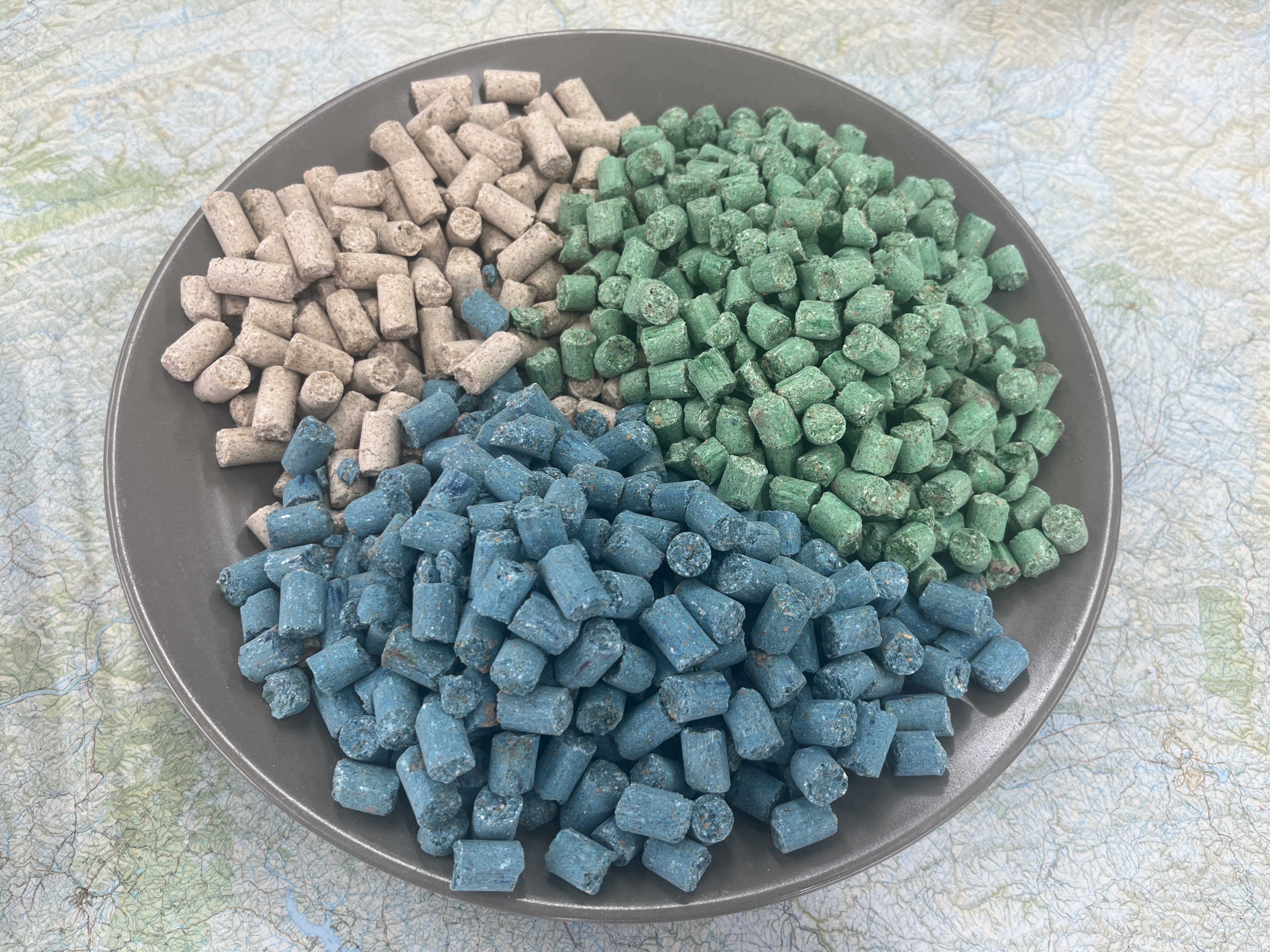
Different sized baits, each a different colour, so that we could spread bait on three passes before marking and picking them up. Tan is 2 g, blue is 1.4 g and green is 1 g
We already have a lot of information on the 2-g pellets, as they are commonly used in rodent eradication operations, so the exercise here was to see how the 1-g and 1.4-g baits performed in comparison. We also wanted to trial using a bigger pulley on the bait bucket, with the aim of increasing the swath width. This would give us a better chance of completing the baiting in the 2027 aerial baiting trial on Marion Island in one day, a core task if we are to commence the monitoring the day after the bait application.
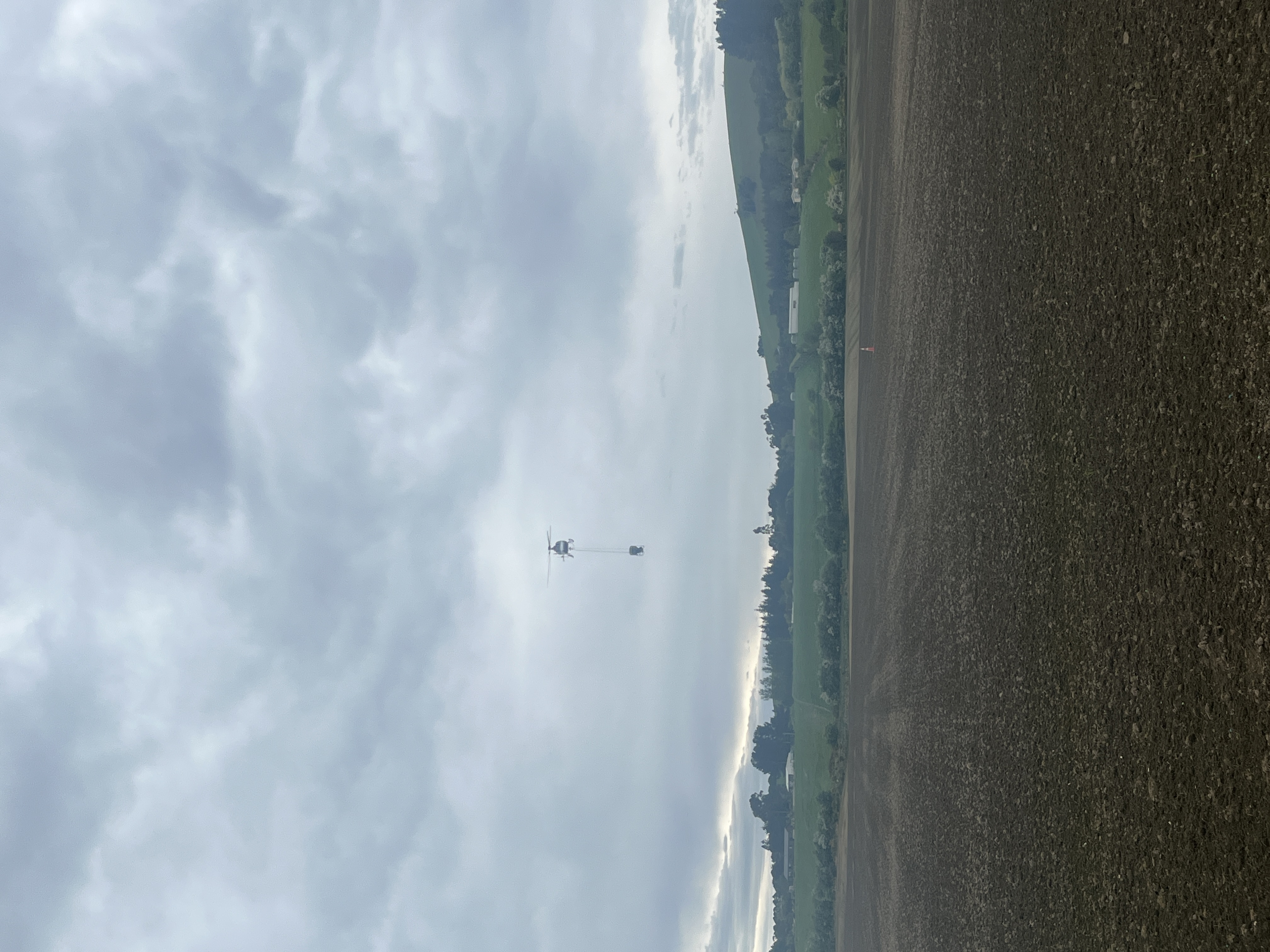
Pilot Matt Brown, Central South Island Helicopters, lines up for a baiting run
Finally, the two buckets we had at Herbert are those we will be using in next year’s Marion Island 1000-ha baiting trial, so we wanted to calibrate them to give us the correct application rate. There are two key variables that influence the application rate – helicopter speed and the size of the aperture in the interchangeable disc sitting above the bucket spinner. Increasing the helicopter speed slightly reduces the application rate, while slowing down increases it. Increasing the aperture size of the disc increases the application rate and using a smaller aperture decreases it. We typically fly bait applications at 50 knots (93 km/h), so slight adjustments are made to the application rate by varying the speed slightly, but bigger changes require changing the disc in the bucket – a very quick task.
We found that the 1-g baits appeared to be a bit softer than the 1.4-g baits, and this was probably a reflection of the manufacturing process. However, this softness meant that these pellets were more prone to fragmentation than the harder 1.4-g baits.
The tan-coloured 2-g bait proved difficult to see against the tan colour of the farm track upon which out transect was set out. It required multiple sweeps by several people to find all the pellets.
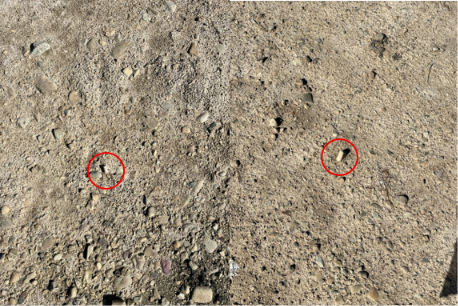
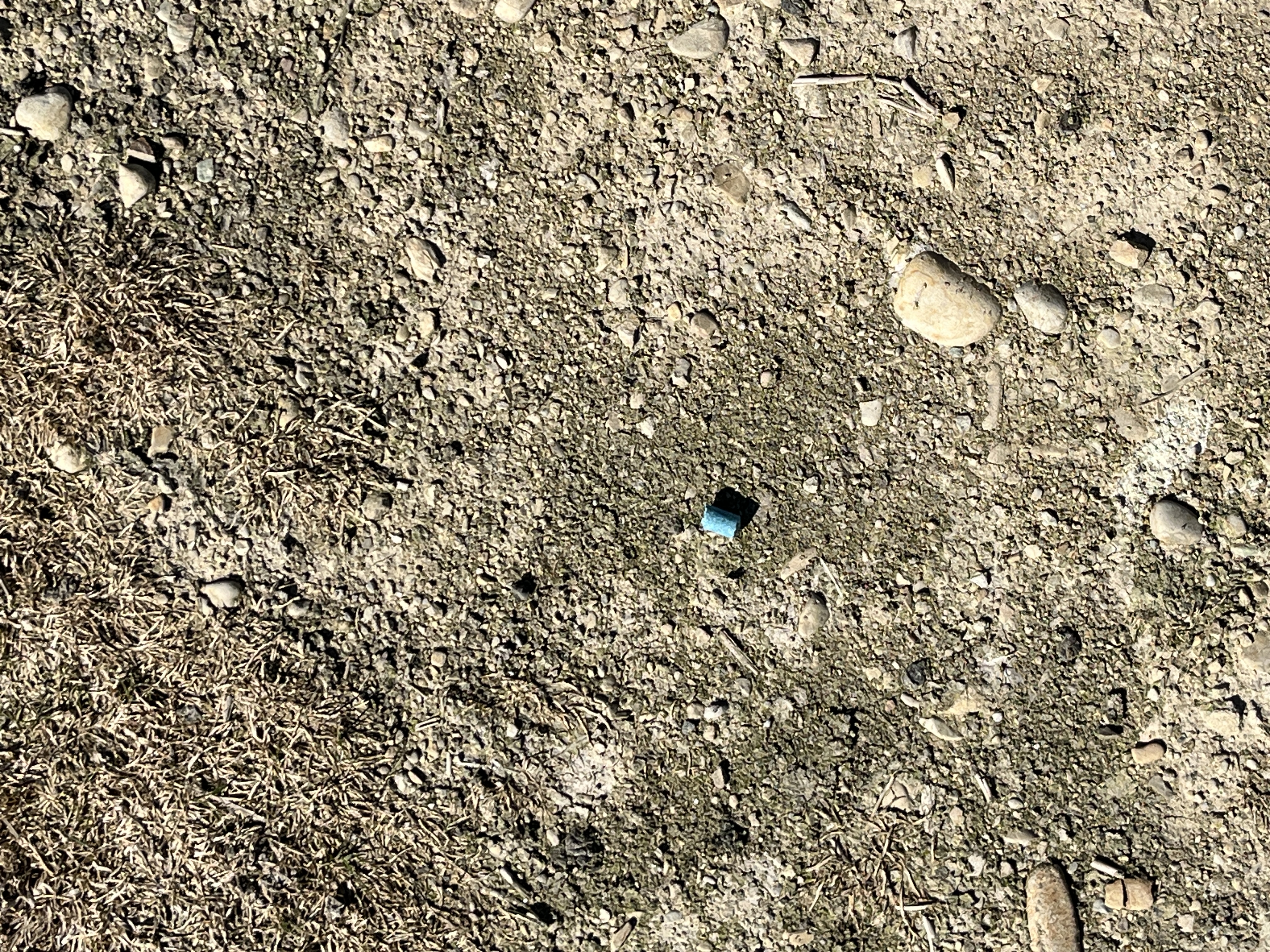
The non-dyed pellets proved difficult to see on the dirt track of the baiting transect (left) and could sometimes be confused with stones (right), whereas blue and green pellets stood out well (bottom); all photographs by Keith Springer
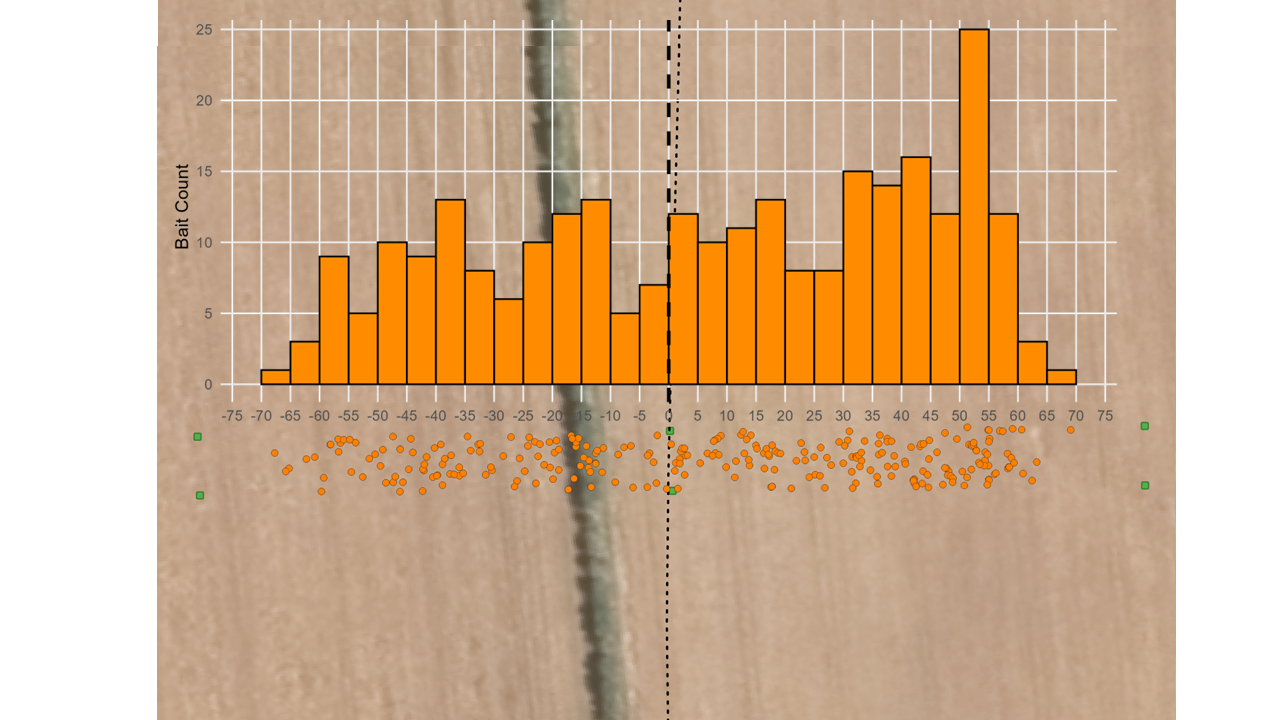
An example of how the data collected is presented. From this pictogram of a flight spreading 2-g bait, we can determine the overall and effective swath width in metres, the application rate and the distribution of pellets (the orange dots) through the swath area, in 5-m segments (bins). This flight used a larger bucket motor pulley; graphic by Blake Hornblow, DOC
Once the flight line data are analysed, we will use this information to determine what aperture disc we will use for the 2027 aerial baiting trial to get the correct application rate, and also what size bait we will use for the trial. The information will also assist DOC with their planning for the proposed mouse eradication on Auckland Island.
Matt Brown, the owner of Central South Island Helicopters, did all the baiting flights over the two days of trials, and will also be flying with Aeronautic Solutions Ltd when the aerial baiting trial is undertaken in April-May 2027 during the annual takeover voyage to Marion Island.
Keith Springer, Mouse-Free Marion Project Operations Manager, 12 November 2026
**************************************************************
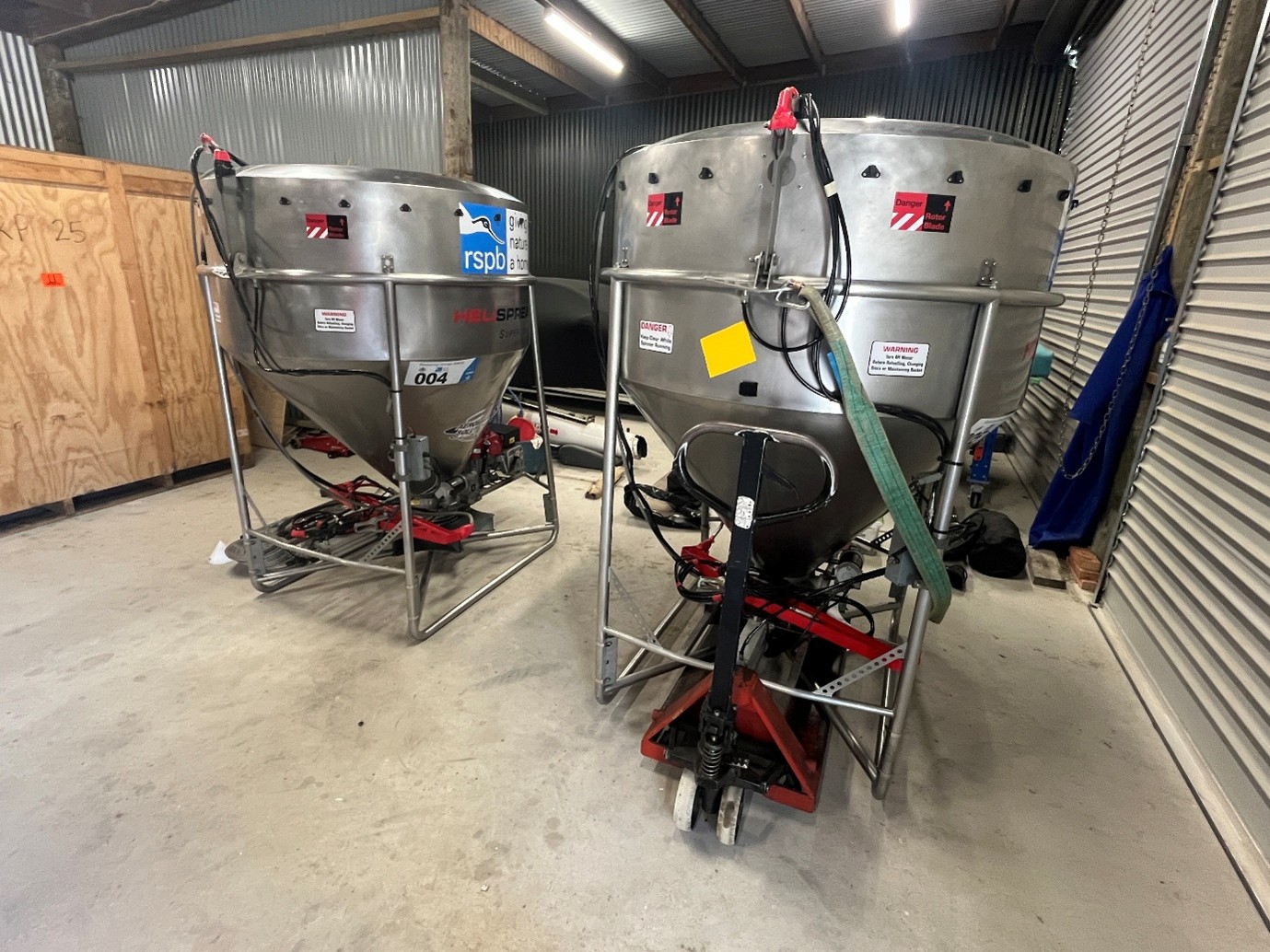
These two bait buckets on loan from the Royal Society for the Projection of Birds will be used for the aerial baiting trial on Marion Island in 2027
The Saving Marion Island’s Seabirds: The Mouse-Free Marion (MFM) Project is a registered non-profit company (No. 2020/922433/08) in South Africa, established to eradicate the invasive albatross-killing mice on Marion Island in the Southern Ocean. The project was initiated by BirdLife South Africa and the South African Department of Forestry, Fisheries and the Environment. Upon successful completion, the project will restore the critical breeding habitat of over two million seabirds, many globally threatened, and improve the island’s resilience to a warming climate. For more information or to support the project please visit mousefreemarion.org