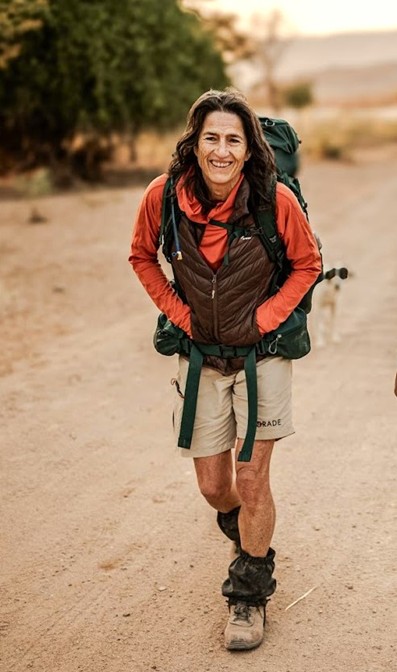
Esme Beamish on a hike along the Kunene River in July 2024, photograph by Bruce Paxton
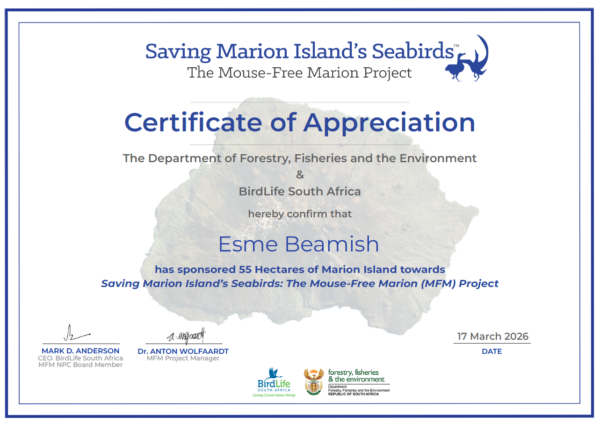
In January 2022, Esme Beamish, a Cape Town resident and a self-described “keen but amateur” birdwatcher, made a generous 25-hectare sponsorship to the Saving Marion Island’s Seabirds: The Mouse-Free Marion (MFM) Project. MFM News got back in touch with Esme recently to ask what had kept her motivated over the last two years to more than double her original donation with a further 30-ha sponsorship, totalling 55 ha, and moving her from the Grey Petrel to the Giant Petrel category on the MFM Project’s Honour Roll.
Esme has replied saying there are two things that encouraged her to continue supporting the MFM Project: “First, naïve albatross chicks and even adult birds are being eaten alive because of historical human ignorance — and now, from a lack of concern. We can’t accept this. Our past commercial exploitation of elephant seal blubber and fur seal skins, together with the introduction of mice and cats to Marion has disrupted the island’s natural balance. Neighbouring Prince Edward Island is a reminder of the extraordinary ecosystem Marion Island once was. We owe it to the island’s wildlife and to future generations to repair the damage we created — whatever the cost — and restore this vital refuge in the vast Southern Ocean to a healthy, functioning environment for seabirds, marine mammals and terrestrial species alike.”
Esme continues: “Secondly, and equally importantly, the Mouse-Free Marion Project has been meticulously planned by a team of experienced seabird scientists and conservationists. The operation is grounded in sound science, extensive preparation, and international best practice — and it will therefore succeed.”
“I recently visited the Svalbard Archipelago and was made aware of the vulnerability of Polar Bears and Arctic wildlife in general and observed melting glaciers. During a week in the region, we saw only two bears which brought home the reality of how fragile these ecosystems have become. The experience reinforced for me the importance of protecting remote natural environments where wildlife can survive and thrive with minimal human interference. It strengthened my support for the Mouse-Free Marion Project and the urgent need to restore the island to a mouse-free state so that albatrosses and other seabirds can once again breed in safety. I believe we have a responsibility to repair ecological damage caused by human activity and to protect these extraordinary ecosystems for future generations.”
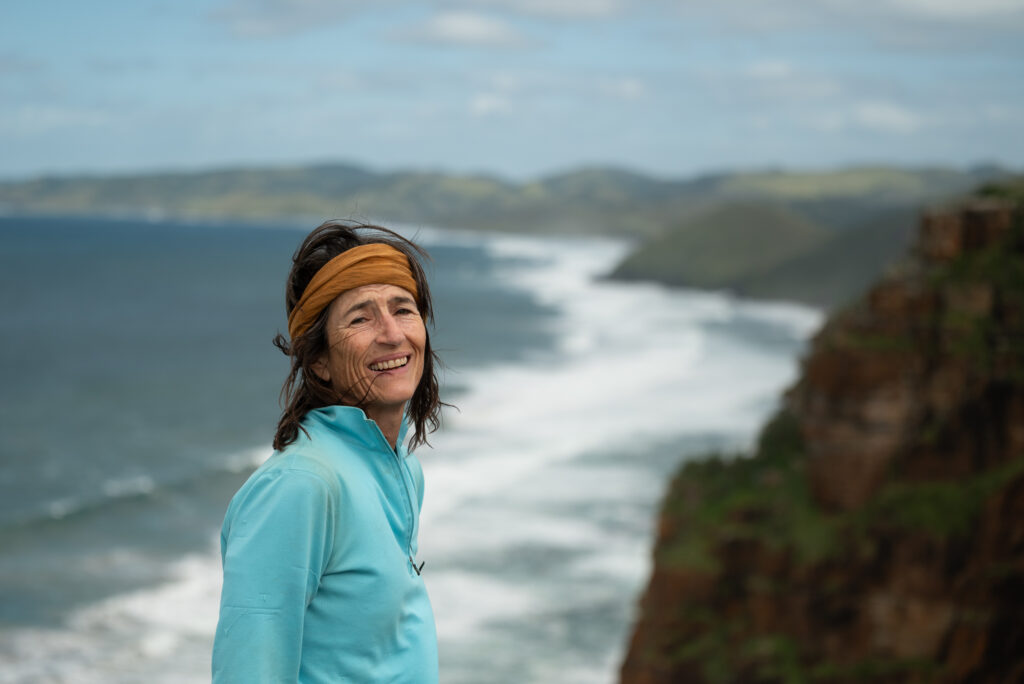
Esme hiking along the Pondoland coast in April 2025, photograph by Bruce Paxton
Esme was aboard the first Flock to Marion Island voyage in 2022, but she decided not to repeat the experience on the 2025 voyage, saying she would rather sponsor more hectares for the MFM Project. Such heartening support is what drives the whole MFM Team to work towards its ultimate goal, a recovering island free of the scourge of albatross-killing mice.
John Cooper, News Correspondent, Mouse-Free Marion Project, 20 May 2026
******************************************************************************
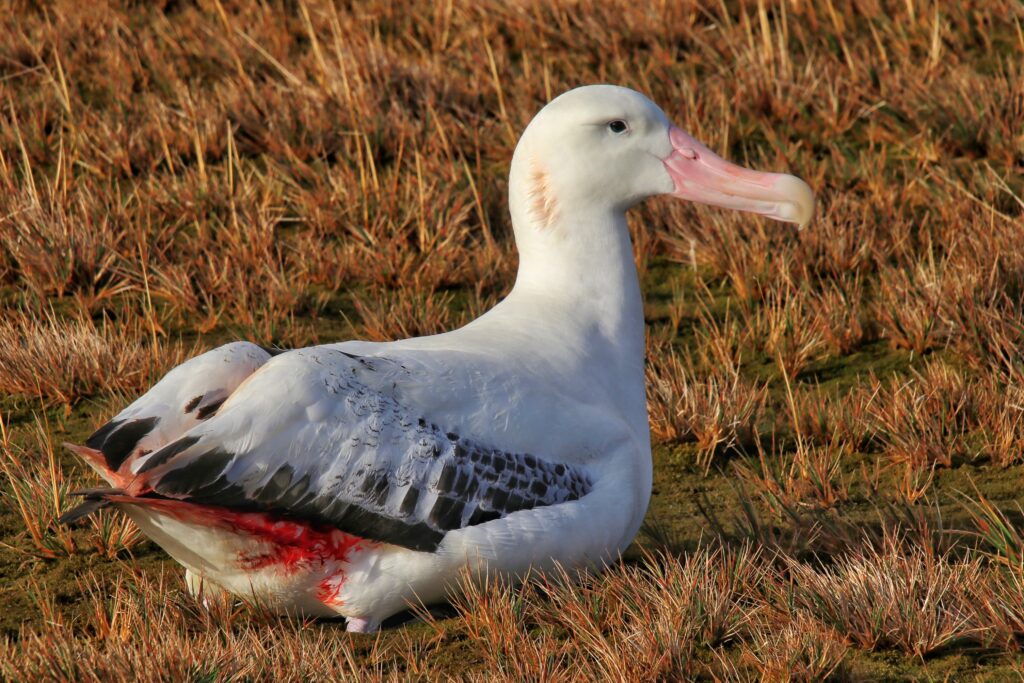
It is not only chicks that Marion Islands’s alien mice are affecting. This old male Wandering Albatross shows signs of a night-time attack, with blood staining the white plumage, April 2023. Photograph by Chris Jones
The Mouse-Free Marion Project is a registered non-profit company (No. 2020/922433/08) in South Africa, established to eradicate the invasive albatross-killing mice on Marion Island in the Southern Ocean. The project was initiated by BirdLife South Africa and the South African Department of Forestry, Fisheries and the Environment. Upon successful completion, the project will restore the critical breeding habitat of over two million seabirds, many globally threatened, and improve the island’s resilience to a warming climate. For more information or to support the project please visit mousefreemarion.org.