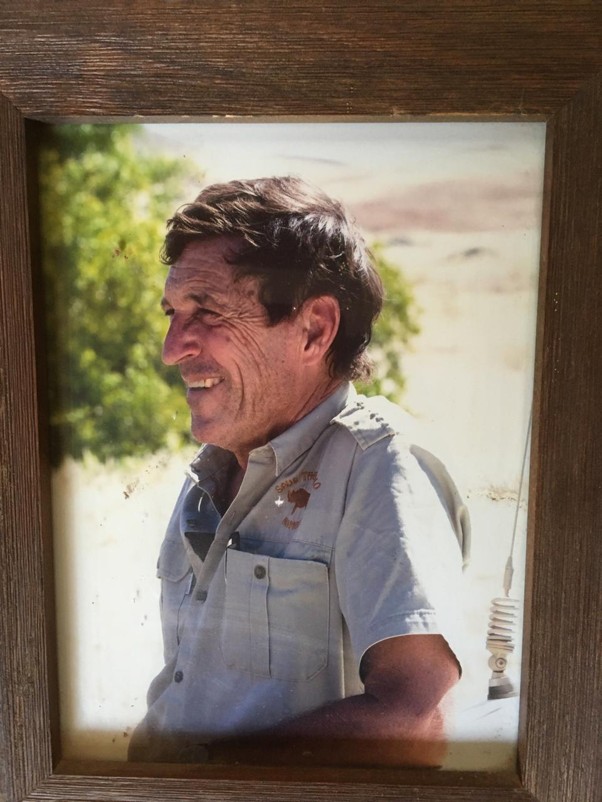
Rudi Loutit in the Palmwag Concession, a 500 000-hectare protected area in northwestern Namibia, in 2006
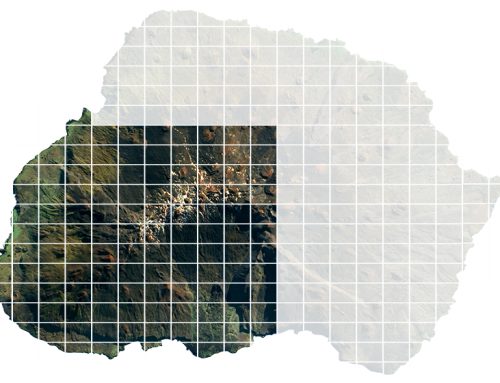
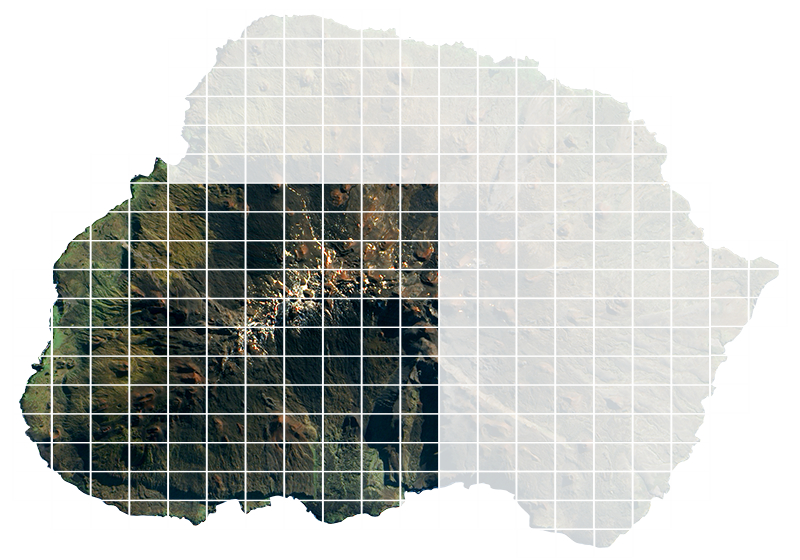
Retired Namibian conservationist Rudi Loutit has honoured the memory of four of his conservation colleagues by sponsoring the Saving Marion Island’s Seabirds: The Mouse-Free Marion (MFM) Project with a hectare for each. The four biologists, who conducted conservation research in Namibia (and when the country was known as South West Africa until it became independent in 1990), are Hu Berry, Charles Clinning, Mike Griffin and Johan Stutterheim.
Rudi, with the help of his Namibian colleague, Peter Bridgeford, has put together brief obituaries for the four, as follow.
Hermanus Human Berry, 1939 – June 2011
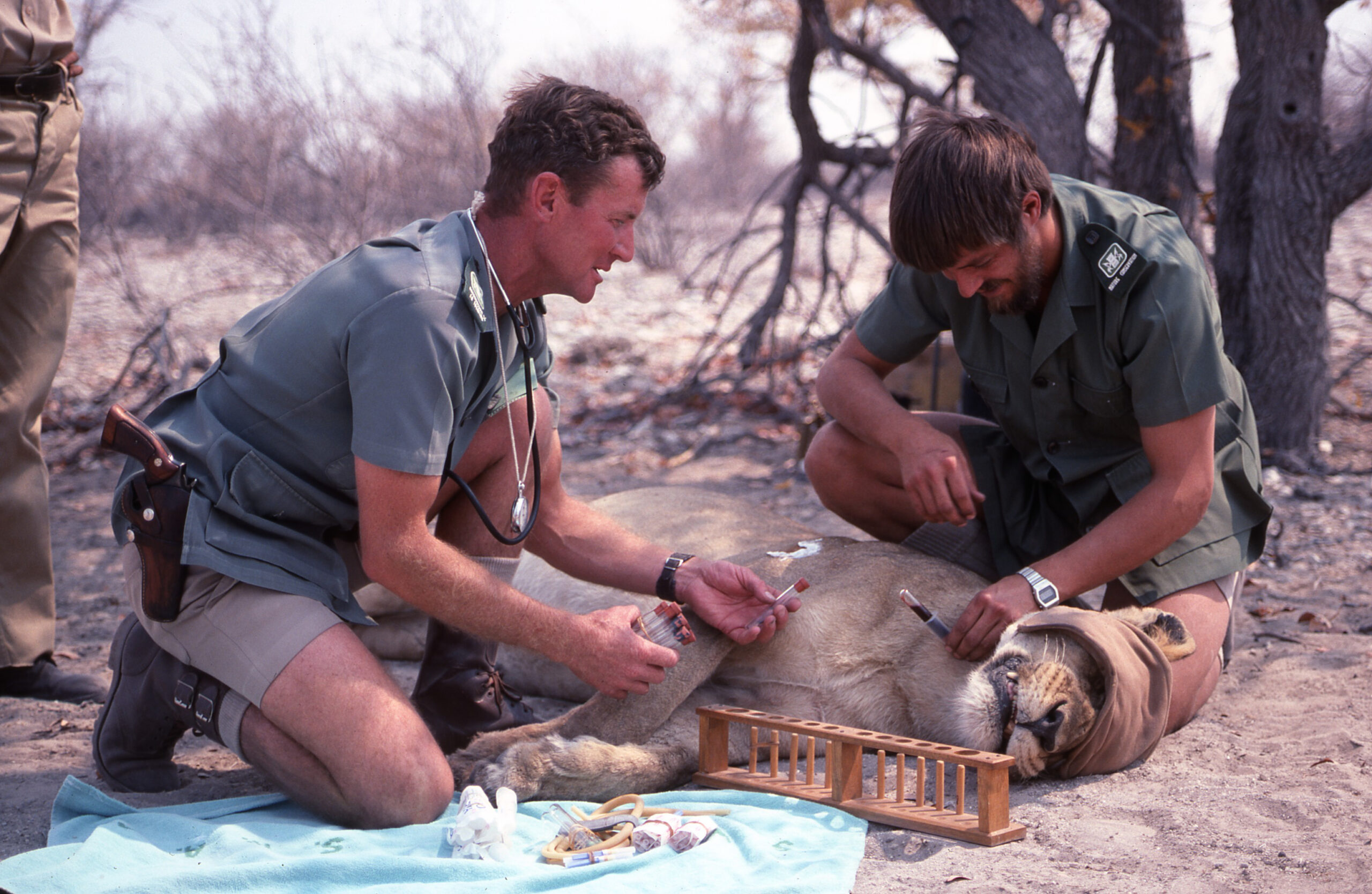
Hu Berry (left) and his assistant Eugene Cronje take blood samples from a lion in 1981
Hermanus Human (Hu) Berry trained as an entomologist and zoologist at the University of Pretoria. He met his wife Conny in the same city and followed her to her home country, now Namibia, where they married in 1969. They had two sons, Mark and Paul.
Hu. started his career in conservation in the then South West Africa in July 1970. His first job was undertaking an ecological study of Sandwich Harbour, a coastal wetland that is a haven for waterbirds. He later obtained an MSc degree with distinction entitled “The Ecology and Physiology of the Cape Cormorant”. When the Ecological Institute opened at Okaukuejo in 1974, he headed its team of researchers. Hu’s subsequent 15 years as a biologist and warden in charge of Namibia’s Etosha National Park enabled him to experience at first hand the life cycles of African wildlife. He followed wildebeest herds day-and-night on the vast plains surrounding the Etosha Pan, recording their behaviour in detail. For this, he was awarded a PhD.
Probably the most memorable part of his career was the post-doctoral research he carried out on the ecology, behaviour and population dynamics of Etosha’s lions. An offshoot of this work was when he and his friend, Jock Orford, who practiced as a gynaecologist, implanted hormonal contraceptives in lionesses when their numbers became excessive. This was done as a preferable alternative to culling lions within a national park. The work about “Lionesses on the Pill” gained him and his team worldwide recognition as pioneers of this type of wildlife management and he subsequently published and presented his findings at international wildlife symposia.
To complete a lifelong career in the conservation of Namibia’s superb spectrum of wildlife, Hu worked for many years at the Gobabeb Research and Training Centre, on the banks of the Kuiseb River in the Namib Desert. He retired from the Namibian Ministry of Environment and Tourism 33 years after starting his career in conservation. He passed away in June 2011.
Michael Griffin, died October 2019
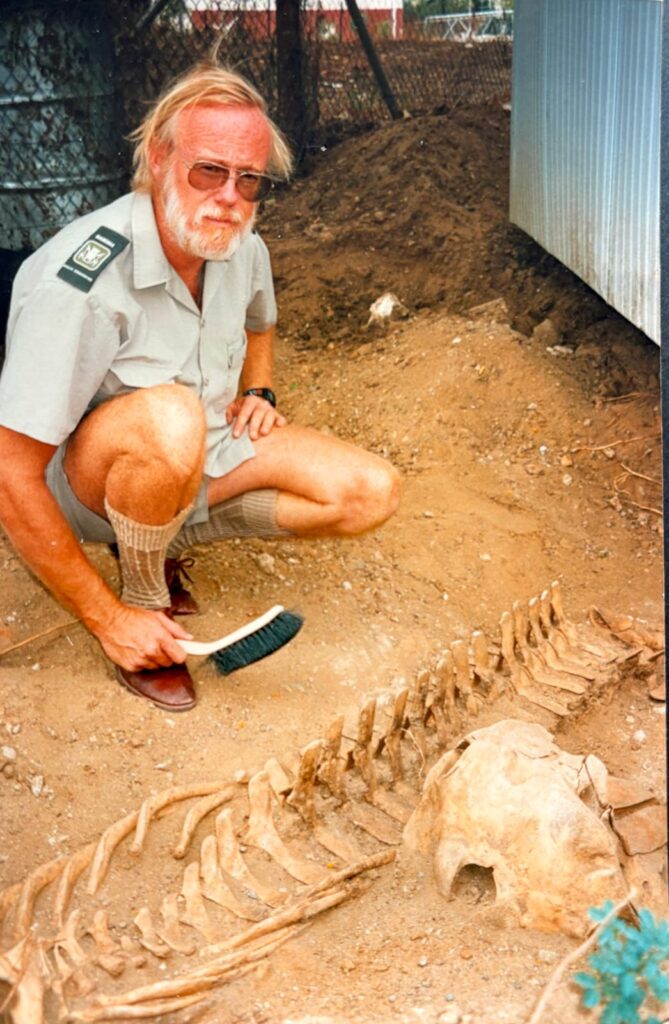
Mike Griffin exposes a cetacean skeleton from Namibia’s Skeleton Coast
Born in the USA, Michael (Mike) Griffin settled in Namibia (then South West Africa) in 1975, when he joined the State Museum (now the National Museum of Namibia) in Windhoek as the mammal curator. He transferred to the then Department of Nature Conservation as a small-animal biologist in 1977. He was the man to see if you wanted to have rodents, snakes, bats and other small creatures identified. In 1998 he published The Species Diversity, Distribution and Conservation of Namibian Mammals in the journal Biodiversity and Conservation. He was busy compiling the Namibian Red Data Books on mammals, reptiles and amphibians when he reached retirement age in 2008. Not long thereafter he returned to California in the USA. Mike died in October 2019.
Rudi writes: “I first met Mike at a research officers’ meeting in Windhoek in 1979. As Nature Conservators involved in management, we were encouraged to attend and even to give papers on a variety of subjects. At the meeting Mike presented a co-authored report on the numerous collisions between vehicles and kudu, especially on the road between Windhoek and its airport.”
Charles Francis Clinning, c. 1943 – March 1994
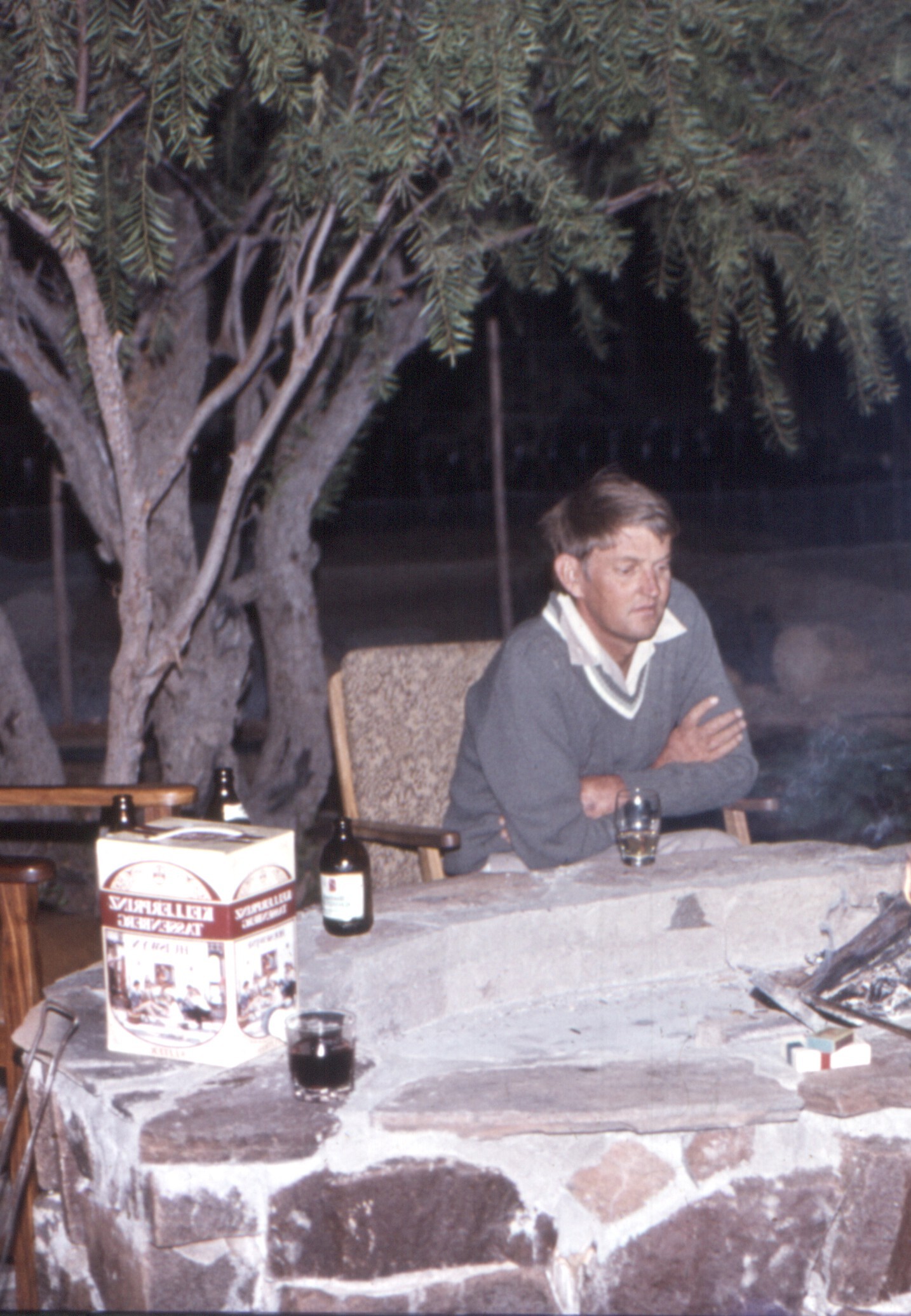
Charles Clinning in Ganab, photograph by Jan van Rensburg
Charles Clinning as a child lived in Modderfontein, near Johannesburg. He spent much of his boyhood in the country, watching birds or catching snakes to put in his snake pit in the back yard. At weekends and on holidays, he would hike to the north of Pretoria to interesting-looking places for birds and to catch snakes. When he was only 14, he hitchhiked to Victoria Falls to attend the First Pan-African Ornithological Congress held in Livingstone, in what is now Zambia, in 1957. After studying at Cedara Agricultural College near Howick, he was employed on a research farm, first as an assistant and later as the manager.
Charles married in 1964, and in 1969 he applied for a post in the conservation division in South West Africa. He was appointed to the Daan Viljoen Game Park as a nature conservator. In 1971 Charles moved to Johannesburg to attend the University of the Witwatersrand, receiving his BSc Hons in 1974. The next year he returned to South West Africa with his family and was posted to Walvis Bay as an assistant nature conservator, as there were no research posts then available.
Later, and employed as an ornithologist, he and other employees of the South West Africa Administration moved to Swakopmund, out of the Walvis Bay enclave, then still part of South Africa. Charles continued with his work on birds from his Swakopmund office until 1979. In mid-1979, Charles became ill with kidney problems and was transferred to Windhoek. From there, he was sent to Cape Town for treatment as there were no suitable facilities available in the capital city. He received a kidney transplant, which was not successful, and returned to Windhoek where he lived with his family until 1981. He was then transferred to Transvaal Nature Conservation in Pretoria, as he required permanent dialysis. He continued to work for them whilst undergoing treatment until 1991, when he was ‘boarded’. Charles passed away in March 1994.
Rudi writes “I first met Charles in the Etosha National Park when he was attempting to catch vultures using a cannon net. It was very time consuming, with poor results. When working in the Skeleton Coast Park in the early 1980s I observed Bradfield’s Swifts feeding on bees at the Ugab River. He was most interested and helped me to write a short note that published in the journal Madoqua”.
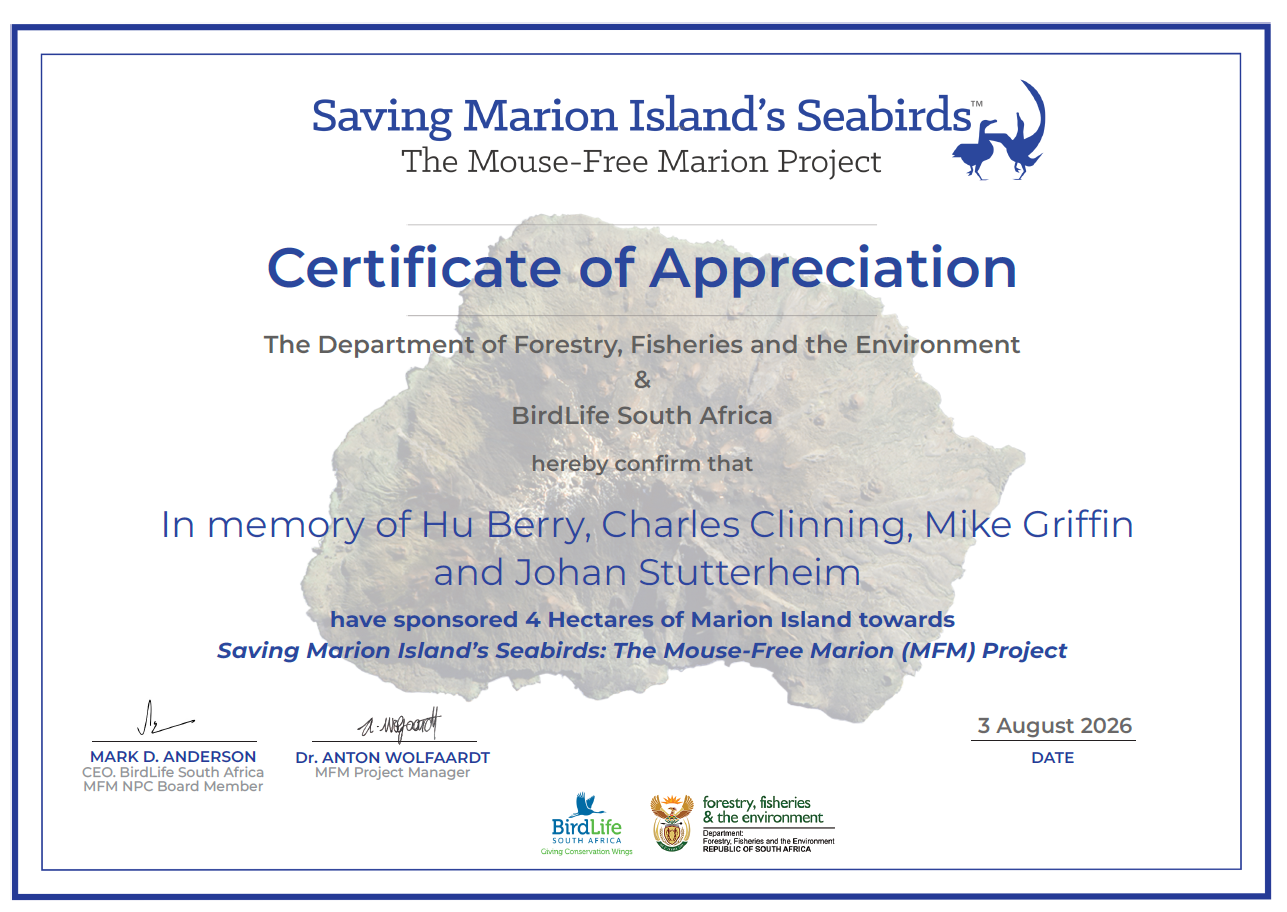
Cornelius Johannes Stutterheim, 28 July 1950 – 01 June 1982
Cornelius Johannes (Johan) Stutterheim was born on 28 August 1950 in Pretoria. He studied zoology and physiology in Potchefstroom at what is now-called North-West University, where he graduated with a BSc with distinction in 1971. He then moved to the University of Pretoria to undertake Zoology Honours (again with distinction), going on to work towards an MSc, awarded in 1976 for a study of the biology of the Red-billed Oxpecker in the Kruger National Park. This project was later expanded into a doctoral study, Johan receiving his DSc in 1979. With his postgraduate studies completed, he joined the lecturing staff in the Zoology Department at the then Rand Afrikaans University in Johannesburg. In August 1981, he was appointed a Senior Professional Officer in the South West Africa Department of Nature Conservation.
Johan married Irene Bezuidenhout (who also studied oxpeckers) in 1978 and they had two children. In June 1982, he was killed in a light aeroplane which crashed while attempting to land at the Halali Rest Camp at the very young age of 31 while conducting a six-week aerial wildlife census of the whole Etosha National Park. Along with him in the plane were four of his management and research colleagues and the pilot – all were tragically killed in the ensuing fire. Shortly before his passing he had joined a survey of waterbirds in the 1981/82 summer along the whole Skeleton Coast north to the Angolan border with Rudi, and with John Cooper and Peter Ryan from the University of Cape Town’s FitzPatrick Institute of African Ornithology.
Note: no photograph of Johan Stutterheim has yet been found.
The Mouse-Free Marion Project joins Rudi Loutit in honouring his four colleagues and thanks him for his support. On a personal note I knew three of the four, conducting field work on shorebirds and vultures in South West Africa in the late 1970s/early 1980s with Charles Clinning and Johan Stutterheim, and with Rudi Loutit – fond memories!
John Cooper, News Correspondent, Mouse-Free Marion Project, 19 August 2026
***********************************************************************
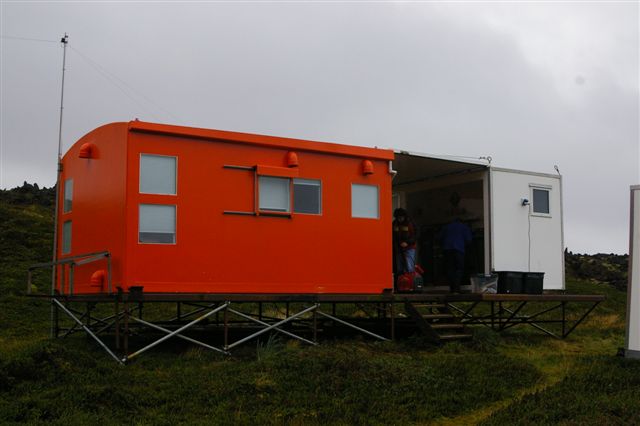
The field hut below Grey-headed Albatross Ridge on Marion Island, photograph by Bruce Dyer, 10 May 2012
The Mouse-Free Marion Project is a registered non-profit company (No. 2020/922433/08) in South Africa, established to eradicate the invasive albatross-killing mice on Marion Island in the Southern Ocean. The project was initiated by BirdLife South Africa and the South African Department of Forestry, Fisheries and the Environment. Upon successful completion, the project will restore the critical breeding habitat of over two million seabirds, many globally threatened, and improve the island’s resilience to a warming climate. For more information or to support the project please visit mousefreemarion.org.